

Cats have been in art since humans started making art. They were gods. Then they were demons. Now they're on the internet. Here's the whole journey, more or less.
(Pictured above: The Gayer Anderson Cat, from the British Museum)
Ancient Egypt: When Cats Were Sacred
This is where it starts. Egyptians didn't just like cats, they worshipped them. Bastet, the cat goddess, was one of the most popular deities in the Egyptian pantheon. Cats were protected by law. Killing one, even by accident, was a serious crime. When a household cat died, the family shaved their eyebrows in mourning.

British museum, Egypt mummies of animals (4423733728).
The art reflects this. Cats show up in Egyptian paintings, sculptures, and jewellery constantly. Sleek, elegant, dignified. Bronze cat statues from this period are some of the most recognizable ancient art objects in the world. They painted and sculpted cats the way cats see themselves, basically.
Medieval Era: The Dark Ages (For Cats)
Cats had a rough few centuries after that. In medieval Europe, they got tangled up with superstition, witchcraft, and general suspicion. Black cats especially got a terrible reputation they're still shaking off.
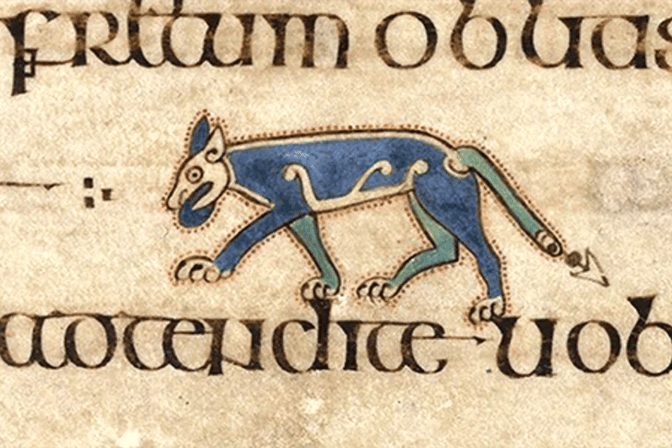
Cat from the Book of Kells © The Board of Trinity College, University of Dublin.
Medieval artists painted cats looking... unhinged. If you've seen the "ugly medieval cats" meme, those aren't exaggerations. That's actually how they drew them. Whether it was deliberate (cats as symbols of sin) or just a lack of interest in realistic animal anatomy, the results are incredible. Cats in medieval manuscripts look like they've seen things no living creature should see.
Renaissance and Baroque: Cats Creep Back In
The Renaissance brought cats back indoors, at least in art. They start showing up as domestic companions in paintings, usually doing something relatable. Stealing food in Dutch still lifes. Sitting on laps in family scenes. Being generally unbothered while humans pose dramatically around them.
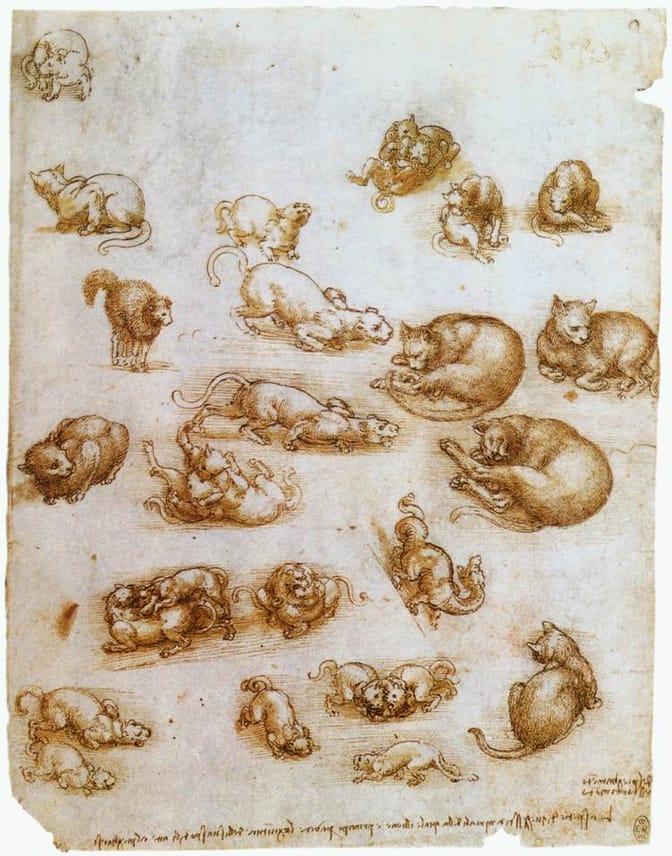
Leonardo da Vinci, "Studies of Cats" (c. 1517-1518), pen and ink. Royal Collection Trust
Leonardo da Vinci sketched cats obsessively. There's a famous page of studies where he drew dozens of cats in different positions, along with a few that look suspiciously like dragons. (Relatable creative process, honestly.) Cats were gradually rehabilitated in the art world, moving from symbols of evil to symbols of domestic life.
Japanese Cat Art: An Entire Tradition
While European art was going back and forth on whether cats were good or evil, Japanese artists were just painting them being awesome.
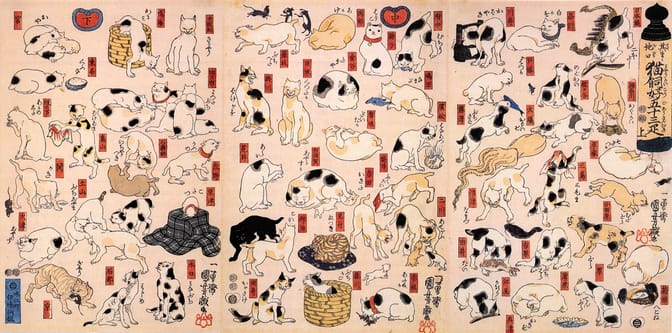
Utagawa Kuniyoshi, "Cats Suggested as the Fifty-three Stations of the Tokaido" (c. 1847), woodblock print.
Utagawa Kuniyoshi, working in the 1800s, is probably the most famous cat artist in Japanese history. His ukiyo-e prints show cats dressed as people, acting out kabuki scenes, working as shopkeepers, and generally living their best lives. He gave cats human qualities in art centuries before the internet did the same thing with memes.
The Japanese tradition of cat art is its own entire world. Cats as characters, actors, warriors, and comedians. It's playful, it's detailed, and it treats cats with the exact combination of respect and absurdity they deserve.
The Victorian Cat Boom
The 1800s were when cat art really took off in the West.

A cat in "gothic" style. Gouache by Louis Wain, 1925/1939.
Louis Wain is the most famous example. He started painting realistic cats and gradually evolved into increasingly psychedelic, kaleidoscopic cat compositions. His work went from "that's a nice cat" to "that cat is vibrating on another plane of existence." Art historians still debate whether his later work reflected mental illness or just artistic experimentation. Either way, the cats are unforgettable.
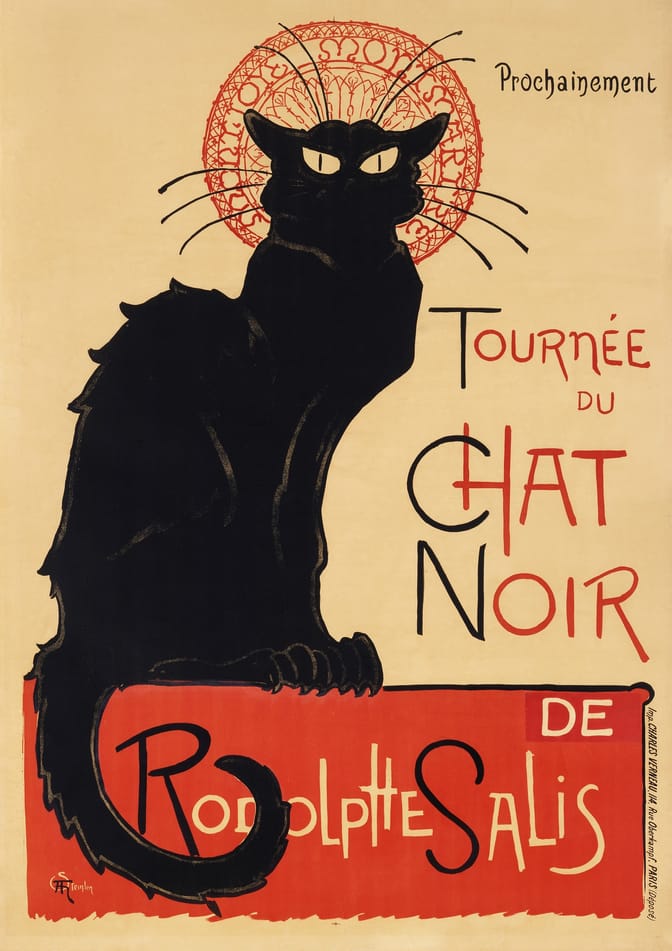
The Black Cat (Tournee du Chat Noir) by Theophile Alexandre Steinlen. We coudn’t do a post about cat art without this one!
Then there's Théophile Steinlen's "Le Chat Noir" poster from 1896, which is probably the single most reproduced piece of cat art in history. It launched an entire visual language of cats as design elements, graphic, stylish, and commercial. Cats went from fine art subjects to pop culture icons almost overnight.
Modern and Contemporary: Cats Everywhere
From Warhol's illustrated cats in the 1950s to the absolute explosion of cat art online, cats are now probably the most depicted animal in popular art. No other animal comes close. Dogs have their moments, birds have their fans, but cats dominate.
The internet accelerated everything. Cat illustration, cat painting, cat photography, cat sculpture. The sheer volume of cat art being created right now is staggering. And unlike most trends, this one shows no sign of slowing down, because cats have been compelling art subjects for literally thousands of years.
Why I Named the Studio After an Ugly Cat
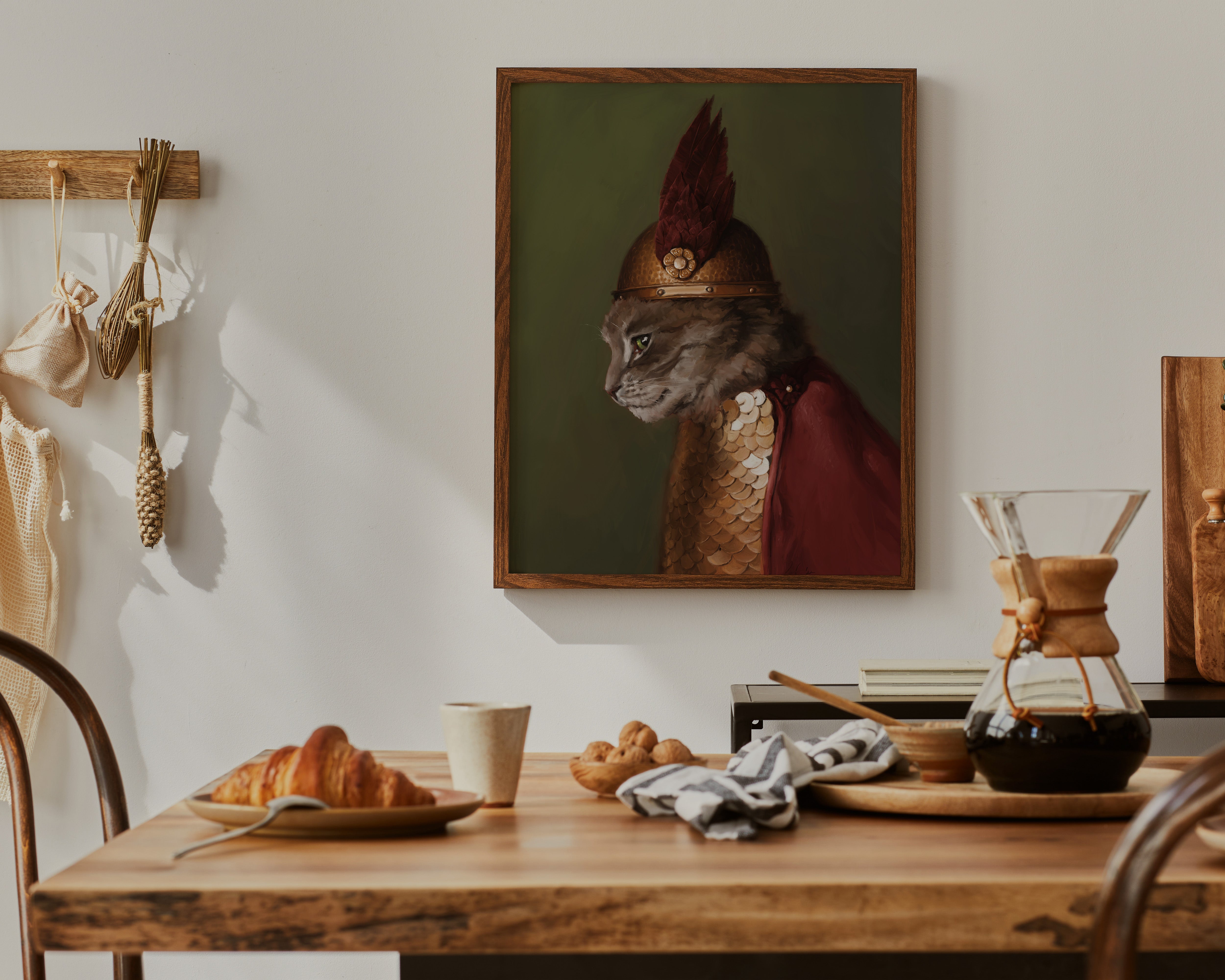
Brünnhilde, by me 🙂
The name comes from my childhood cat, Russell, who for the record was not ugly at all. When I was 17 or 18, I did a quick doodle of him sleeping on the couch. My mom kept it on a pin board in the kitchen for years. Much later, when I finally decided to take the leap and start selling my own art, she pulled out that old drawing. And that was it. The Ugly Cat Studio.
It stuck because it felt right. I'm not trying to paint perfect, polished animals. I'm painting the ones with personality. The ones who look like they have opinions about you. The grumpy ones, the suspicious ones, the ones who clearly think they're better than everyone in the room. Russell energy, basically.
A lot of cat art leans heavily on the "aww" factor. Big eyes, fluffy fur, sweet expressions. That's fine, but it's not what I do. My cats have attitude. They look like they have opinions about you. The grumpy ones, the suspicious ones, the ones who clearly think they're better than everyone in the room. That's the energy I'm after.
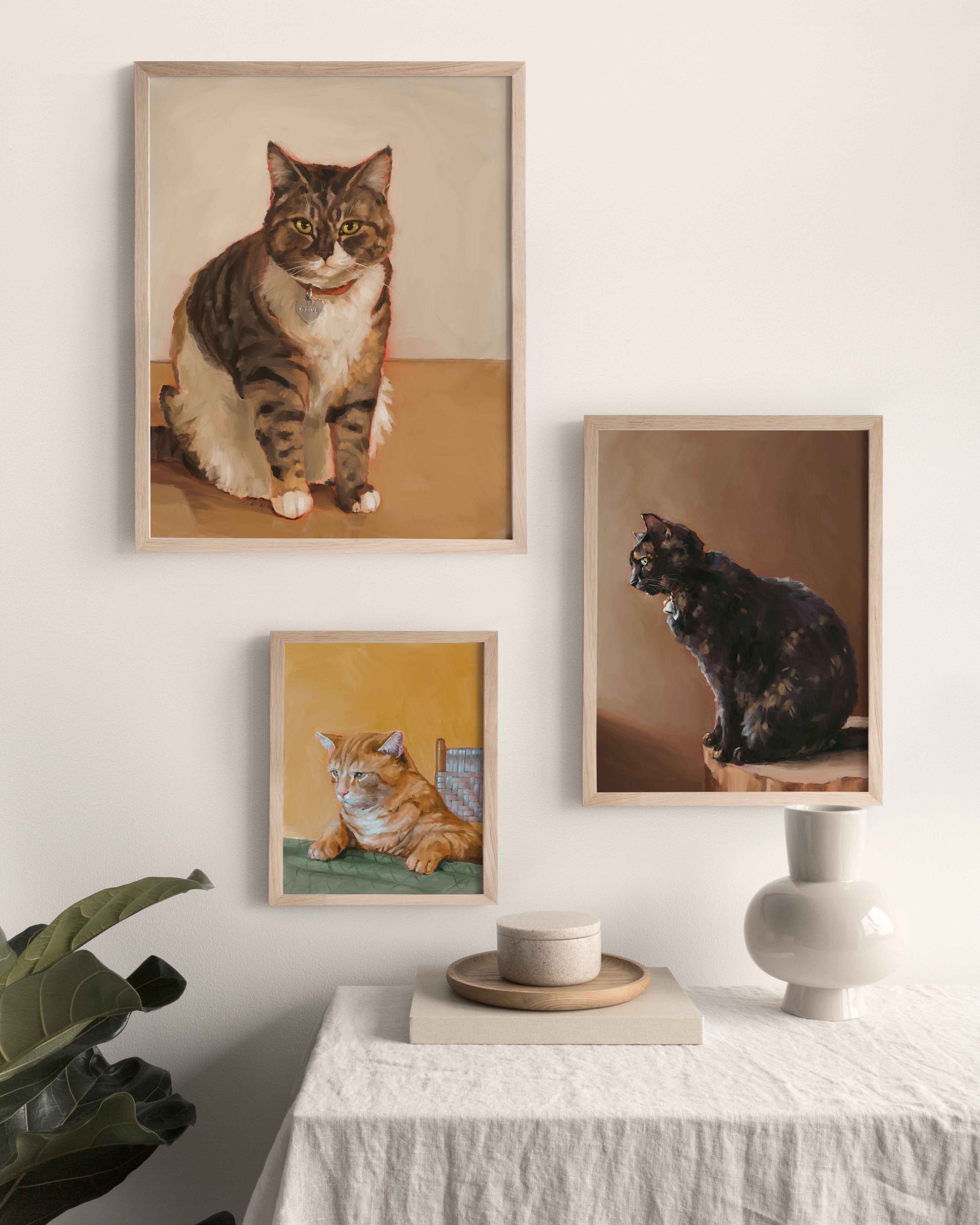
It's the same approach I take with all my animal subjects. The personality is the point, not the prettiness. If a painting of a cat makes you laugh, or makes you think of a specific cat you've known, that's the whole goal.
Browse our cat art print collection to see what I mean, or read about Brünnhilde the Viking Valkyrie Cat, one of our bestsellers and a perfect example of a cat with way too much personality.